.png)

If you've ever walked into a gym and said, "I just want to tone," you're not alone.
Maybe you want to see more muscle definition. Maybe you want to lose some body fat. Or maybe you want to feel stronger without changing your body in a way you don't want.
One of the most common concerns I hear is:
"I want to tone, but I don't want to get bulky."
So let's talk about what toning actually means, how to approach your nutrition, and why strength training is such an important part of the process.
For most people, looking toned means having more visible muscle definition and less body fat.
That comes down to two primary components:
You need muscle to create shape and definition, and your level of body fat influences how visible that muscle is.
This is why simply losing weight isn't always the best way to approach a toning goal.
The scale might go down, but if you lose muscle along with body fat, you may not achieve the look you're hoping for.
Instead, it's worth focusing on improving your body composition.
Nutrition plays a major role in body composition.
When someone wants to lose body fat, we generally look at creating a calorie deficit. This means consuming less energy than the body uses over time.
But if your goal is to tone, you also want to support muscle maintenance or growth.
That means your nutritional approach needs to account for both goals.
For some people, eating around maintenance calories can be a useful starting point. For others, a slight calorie deficit may be appropriate.
Your needs depend on factors such as your current body composition, activity level, training experience, and overall goals.
Maintenance calories are an estimate of the amount of energy your body needs to maintain its current weight.
We typically begin by considering your basal metabolic rate, or BMR, which estimates how much energy your body uses at rest.
Then we factor in your activity level.
This includes:
From there, we can estimate your total daily energy needs.
We also consider your macronutrients: carbohydrates, protein, and fat.
The goal isn't to eat perfectly. It's to create a consistent nutritional approach that supports your health and fitness goals.
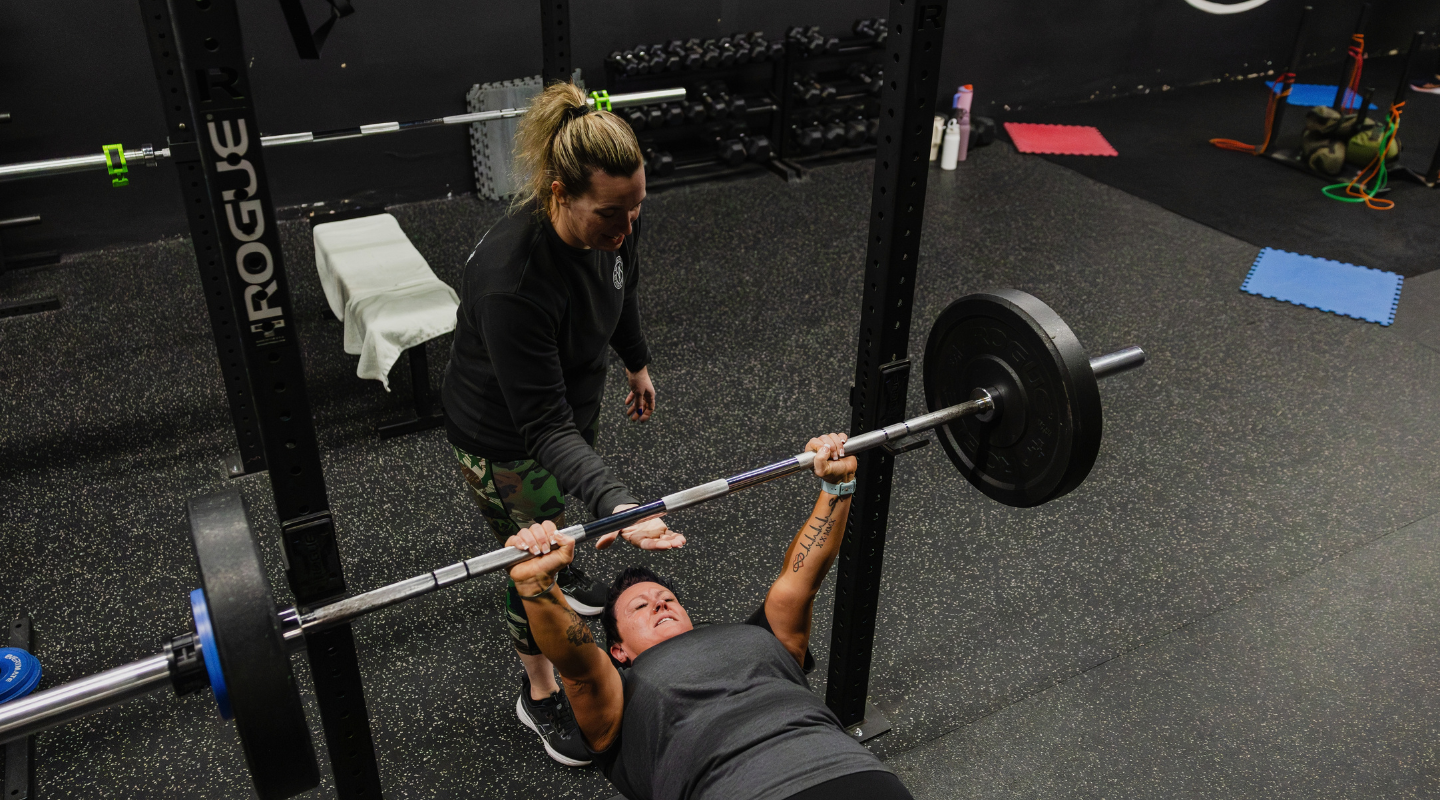
If you want to look toned, strength training needs to be part of your plan.
Why?
Because muscle gives your body shape.
Strength training helps you maintain and build muscle, which can support improved body composition and physical function.
And here's something I want you to remember:
You don't accidentally become bulky from lifting weights.
Significant muscle growth takes consistent training, time, and adequate nutrition.
For most people, strength training is a way to become stronger, improve body composition, and build confidence in what their bodies can do.
It's not something you need to avoid because you're afraid of gaining too much muscle.
Walking is another useful tool for people working toward fat loss or improved fitness.
It helps increase daily movement and energy expenditure while generally being easier to recover from than more intense exercise.
You don't need to make every workout exhausting.
Sometimes, adding a daily walk or increasing your step count is a practical way to support your goals.
Walking doesn't specifically burn only body fat, but it can contribute to overall energy balance and help you build a more active lifestyle.
Think of your body as a machine.
Your muscles require energy to maintain, and building muscle supports strength, physical capacity, and body composition.
While muscle does increase resting energy expenditure, the calorie increase from gaining a modest amount of muscle is relatively small.
The bigger picture is that muscle helps you build a stronger, more capable body while supporting the appearance you're working toward.
You don't need to chase a constantly shrinking calorie target.
You need to provide your body with enough energy and training stimulus to support your goals.
If toning is your goal, start here:
1. Eat appropriately for your goal.
Consider your calorie needs and make sure you're consuming enough protein to support muscle maintenance and growth.
2. Strength train consistently.
Give your muscles a reason to adapt. Focus on progressive overload, proper technique, and a training routine you can maintain.
3. Increase daily movement.
Walking is a simple way to support your activity level without adding unnecessary training stress.
Body composition changes don't happen overnight.
You may not see dramatic changes in a few weeks, and the scale won't always reflect every positive change.
Pay attention to your strength, how your clothes fit, measurements, energy levels, and how you feel.
Consistency matters more than perfection.
If you want to tone your body, you don't need to be afraid of building muscle.
You need to focus on the combination of nutrition, strength training, and movement that supports your goals.
Eat appropriately. Lift weights. Walk consistently. Give yourself time.
Your body doesn't need more punishment. It needs the right tools and the consistency to use them.
Want to learn more? Watch the full podcast episode here!
• REXPERIENCE ALL
Prevail
HAS TO OFFER
• EXPERIENCE ALL
Prevail
HAS TO OFFER •
EXPERIENCE ALL
Prevail
HAS TO OFFER •
.png)
.png)
.png)

.png)
.png)
.png)

.png)
.png)


.jpg)
.jpg)

.jpg)
.jpg)
.jpg)